
Light Requirements
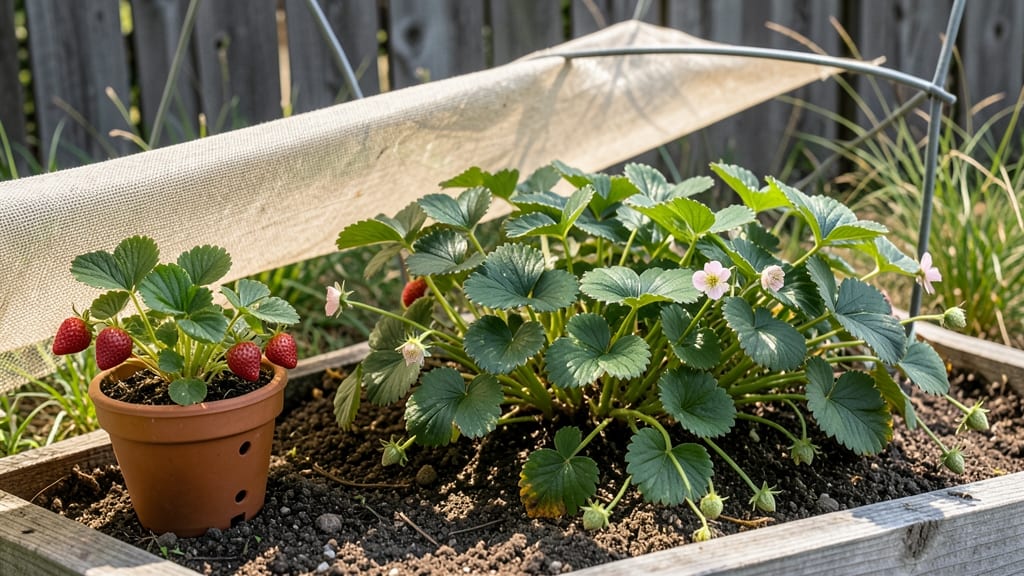
Strawberries can grow in shade but thrive best with 6-10 hours of sunlight daily. Shade-tolerant varieties like 'Albion' or 'Ozark Beauty' produce smaller yields, while partial shade (4-6 hours of light) improves flavor and fruit size in hot climates. Avoid deep shade or dense tree canopies where yields drop significantly.
Strawberries are surprisingly adaptable to lower light conditions, though their growth and fruit quality depend heavily on how much shade they receive. 🌱 In areas with intense summer heat, partial shade can actually protect plants from sunburn and improve berry sweetness, while full shade reduces photosynthesis and weakens plant structure.
The key is choosing the right variety—everbearing types often handle shade better than June-bearing ones, and container-grown plants give you more control over light exposure.
For the best results in shaded spots, select varieties bred for low-light tolerance like 'Seascape' or 'Tristar', which produce reliable harvests even with limited sunlight. Just remember that while these plants may survive in shade, their fruit will be smaller and less abundant than sun-loving varieties.
The trade-off between shade tolerance and productivity is why many gardeners opt for partial shade solutions in hot climates.
💡 In This Article
- How Shade Affects Strawberry Growth and Fruit Production
- Best Shade-Tolerant Strawberry Varieties for Low-Light Gardens
How shade affects strawberry growth and fruit production
Shade directly impacts strawberries through photosynthesis—the process where plants convert light into energy. When strawberries receive less than 4 hours of sunlight daily, their chlorophyll production drops by up to 40%, leading to pale, weak leaves that can't support robust growth.
This energy deficit forces plants to divert resources from fruit development, resulting in smaller berries with lower sugar content. In extreme cases, deep shade causes stems to elongate (a condition called "etiolation"), making plants leggy and prone to collapse.
The difference between partial shade (4-6 hours of light) and full sun (6-10 hours) is dramatic. Plants in partial shade produce berries that are 20-30% larger and sweeter, thanks to slower growth rates that concentrate flavor. However, they yield 30-50% fewer fruits compared to sun-exposed varieties.
The trade-off is especially noticeable in hot climates, where afternoon shade prevents sunburn while maintaining decent productivity. 🌿 In contrast, deep shade (under trees or dense structures) reduces yields by 60-70% and increases susceptibility to diseases like gray mold.
Light quality matters too. Shade filters out blue and red wavelengths—critical for photosynthesis—while allowing green light to pass through. This shift forces strawberries to grow larger leaves to capture more light, but these leaves are less efficient at converting energy.
The result? Plants expend more energy maintaining foliage than producing fruit. For example, 'Chandler' strawberries grown in full sun develop 1.5-inch berries, while the same variety in deep shade produces 0.75-inch berries with half the sugar content.
Another critical factor is temperature regulation. Shade keeps soil cooler by 5-10°F during peak summer, reducing stress on roots and preserving moisture. This is why partial shade often improves flavor in hot regions—slower growth leads to more complex sugars forming in the fruit.
However, if shade is too dense (like under a thick tree canopy), airflow is restricted, creating humid conditions that promote fungal diseases. The ideal scenario is dappled shade with 30-50% light penetration, mimicking natural forest understory conditions.
Consider this comparison: A 'Jewel' strawberry plant in full sun might produce 12-15 berries per season, while the same plant in partial shade yields 8-10 berries but with superior taste.
The key is balancing light exposure with environmental conditions—cool, humid climates tolerate more shade, while arid regions benefit from afternoon shade to prevent water loss. For gardeners, this means strategically placing plants near north-facing walls or under deciduous trees that provide seasonal shade.