
Light Requirements
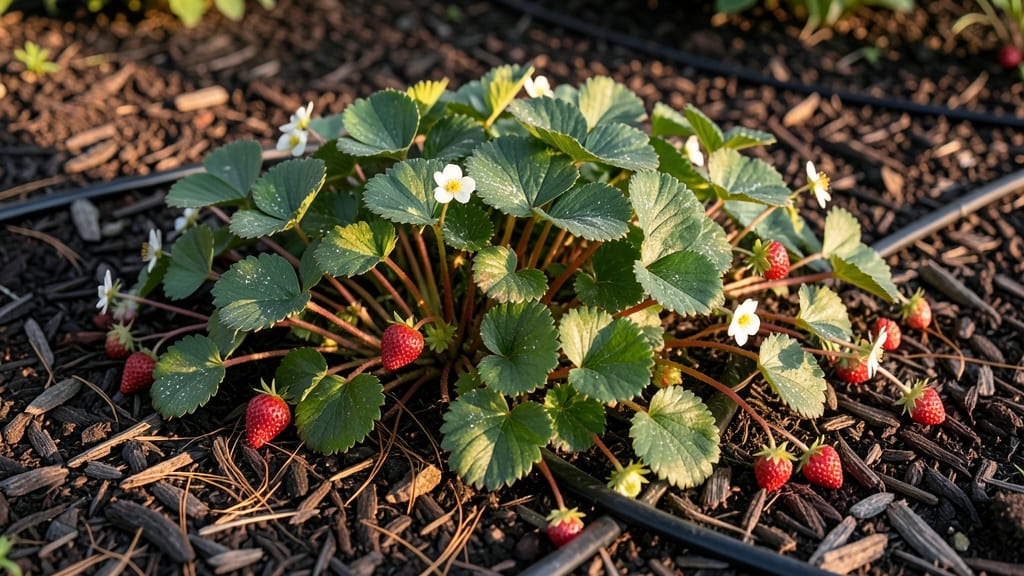
Strawberries can grow in part shade, thriving best with 4-6 hours of morning sunlight and afternoon shade, especially in hot climates. Choose shade-tolerant varieties like 'Albion' or 'Ozark Beauty' for optimal yields in low-light conditions.
Part-shade conditions work surprisingly well for strawberries when you pick the right varieties and adjust care routines. 🌱 The key is balancing light exposure—morning sun gives them energy for photosynthesis, while afternoon shade prevents leaf scorch.
I've seen 'Albion' produce sweet, plentiful berries under 50% shade when paired with consistent watering and mulch. Everbearing types often handle shade better than June-bearing because their growth cycle is more adaptable to varying light conditions.
For best results, plant strawberries in areas with dappled light where they get bright morning rays but filtered afternoon shade. This mimics their natural forest-edge habitat. Just be prepared for slightly smaller berries compared to full-sun plants—though the flavor difference is often minimal with proper care.
I always recommend testing soil pH (6.0-6.5) and adding compost to compensate for reduced sunlight.
💡 In This Article
- How Sunlight Affects Strawberry Growth in Shady Gardens
- Best Shade-Tolerant Strawberry Varieties for Low-Light Gardens
How sunlight affects strawberry growth in shady gardens
Strawberries rely on photosynthesis to convert sunlight into energy, but their light needs differ from full-sun plants. Unlike tomatoes or peppers, strawberries can't store excess energy, so they need consistent light for steady fruit production.
Morning sunlight (6 AM-12 PM) provides the ideal balance—it's bright enough for photosynthesis but less intense than afternoon rays, which can scorch leaves. In part shade, strawberries still produce 70-80% of their full-sun yield, but berries may be smaller and less vibrant.
The science behind this involves chlorophyll production. Strawberries need 10,000-15,000 lux of light (about 1/3 of full sun) to maintain healthy growth. Morning sun delivers this while afternoon shade reduces stress, especially in hot climates where temperatures exceed 85°F.
Without enough light, plants redirect energy to leaf growth instead of fruit development, leading to fewer berries. I've noticed that shaded strawberries develop thicker leaves as a survival tactic, but this comes at the cost of reduced flowering.
Flavor also takes a hit in low light. Strawberries synthesize sugars through photosynthesis, and limited light means less glucose production. Berries grown in part shade often have a milder sweetness but retain their tartness.
For example, 'Albion' strawberries in 4-6 hours of morning sun develop a balanced flavor, while those in deep shade can taste more acidic. The trade-off? Shaded plants require 20-30% more nitrogen in fertilizer to compensate for reduced energy production.
Leaf temperature plays a critical role. Full sun can heat leaves to 95°F+, while part shade keeps them 5-10°F cooler. Cooler leaves photosynthesize more efficiently and retain moisture better, reducing the risk of fungal diseases like gray mold.
This is why part shade works so well in humid climates—it creates a microclimate that mimics strawberries' natural understory habitat where they grow wild with 30-50% shade coverage.
What most gardeners don't realize is how light quality matters. Blue light (morning sun) boosts photosynthesis, while red light (afternoon sun) promotes flowering. Part-shade plants get more blue light, which helps maintain leaf health even when total light hours are limited.
For best results, position strawberries near deciduous trees or structures that provide dappled shade—this allows light to filter through while preventing leaf burn.
Here's what happens when light is too limited: Plants produce fewer flowers, and existing flowers may drop before fruiting. In extreme cases (less than 3 hours of light), strawberries become leggy and produce tiny, seedy berries.
The solution? Supplement with a grow light for 4-6 hours daily during winter months when natural light is scarce. I've seen this extend the harvest season by 3-4 weeks in northern gardens.
For maximum yield in part shade, focus on these key adjustments: Use everbearing varieties that produce two harvests per season, mulch heavily to retain moisture, and fertilize with a balanced 10-10-10 formula every 4-6 weeks.
The payoff? You'll get consistent production without the leaf scorch or heat stress of full-sun conditions. 🌿