
Light Requirements
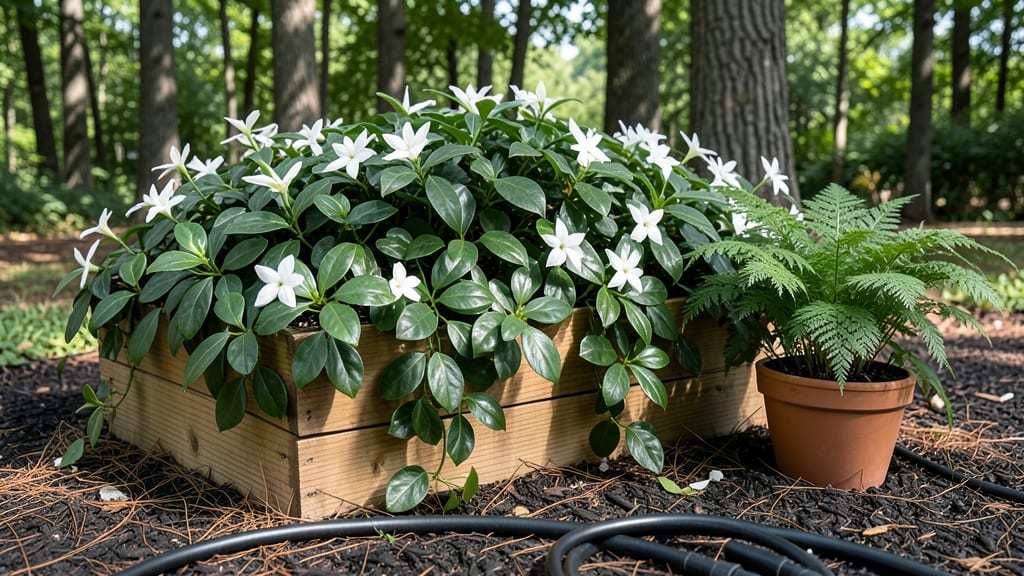
Growing jasmine in shade is possible, but it depends on the variety—some varieties tolerate partial shade (4-6 hours of sunlight daily), while others require full sun exposure. Dwarf types like Jasminum officinale or Jasminum polyanthum handle low-light conditions best, though they may grow slower and produce fewer flowers.
Jasmine plants are famously fragrant, but their light needs vary widely between species. 🌿 If you're working with shade-tolerant varieties like winter jasmine (Jasminum nudiflorum), you can expect vibrant yellow blooms even in dappled light, though they may bloom later in the season.
The key is choosing the right cultivar—some, like star jasmine (Trachelospermum jasminoides), can thrive with just 3-4 hours of indirect sunlight.
For container gardening, ensure your pot has drainage holes and use well-draining soil to prevent root rot, which becomes more likely in low-light conditions where growth naturally slows.
Even shade-adapted jasmine needs some light to produce its signature fragrance. If your plant isn't flowering as expected, try moving it to a brighter spot during the growing season—just avoid harsh afternoon sun, which can scorch delicate leaves.
Pruning in late winter or early spring helps maintain shape and encourages new growth, especially for varieties struggling in dimmer conditions.
💡 In This Article
- Best Shade-Tolerant Jasmine Varieties for Low-Light Gardens
- Tips for Growing Jasmine in Partial Shade Conditions
Best shade-tolerant jasmine varieties for low-light gardens
Jasmine's ability to thrive in shade depends entirely on the species you choose. Winter jasmine (Jasminum nudiflorum) is one of the most shade-tolerant varieties, handling as little as 3-4 hours of direct sunlight daily while still producing its bright yellow blooms.
This deciduous variety even tolerates full shade in colder climates, though flowering may be delayed until late winter or early spring. The trade-off? Its fragrance is milder compared to sun-loving varieties like Arabian jasmine (Jasminum sambac), which needs 6+ hours of sunlight to develop its intoxicating scent.
For those seeking fragrance in shady spots, star jasmine (Trachelospermum jasminoides) is an excellent alternative. This evergreen vine thrives in partial shade (4-6 hours of filtered light) and produces clusters of white, star-shaped flowers with a sweet, jasmine-like aroma.
Unlike many jasmine species, star jasmine's leaves remain lush and green even in low-light conditions, though its growth rate slows significantly—expect 12-18 inches of growth per year compared to 3-5 feet annually in full sun. The foliage also develops a deeper green hue in shade, adding visual interest.
If you're working with containers, dwarf jasmine (Jasminum polyanthum) is a compact choice that adapts well to bright indirect light. This variety typically grows 3-5 feet tall but can be pruned to maintain a 2-foot height, making it ideal for patios or balconies.
Its dark green leaves and clusters of pink buds that open to white flowers add color even in dimmer corners. However, expect 30-50% fewer blooms in shade compared to full sun, as photosynthesis slows without adequate light.
The science behind this lies in chlorophyll production. Shade-tolerant jasmine varieties have evolved to maximize light absorption through larger, thinner leaves that can capture even 10-20% of ambient light in deep shade conditions.
This adaptation allows them to survive with minimal direct sunlight, though their energy reserves are limited—hence the reduced flowering. For example, Jasminum beesianum, a Chinese native, produces fragrant white flowers in partial shade but requires at least 5 hours of light to maintain vigorous growth and abundant blooming.
Consider these key factors when selecting a shade-tolerant variety:
- Fragrance priority: Jasminum sambac (full sun) > Trachelospermum jasminoides (partial shade) > Jasminum nudiflorum (mild scent)
- Growth habit: J. nudiflorum (deciduous) vs. T. jasminoides (evergreen)
- Container suitability: J. polyanthum (compact) or J. officinale (trailing)
For maximum success, pair your shade-tolerant jasmine with a well-draining soil mix enriched with 30-40% organic matter (like compost or peat moss). This helps compensate for the reduced photosynthesis by providing essential nutrients.
In particularly dark spots, supplement with a balanced liquid fertilizer (10-10-10) applied every 4-6 weeks during growing season to support slower growth rates.