
Light Requirements
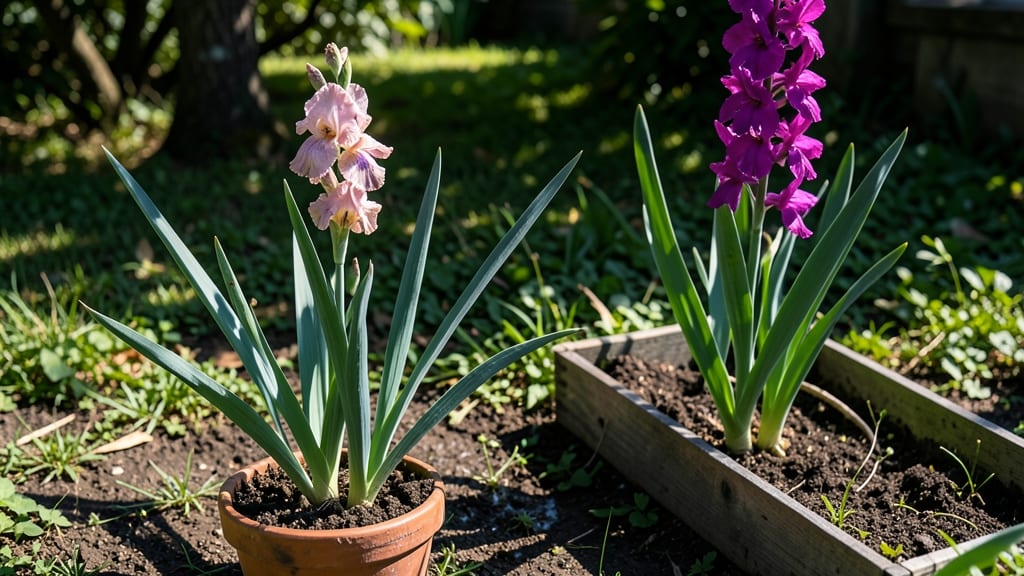
Gladiolus can grow in shade but thrives best in full sun, producing fewer blooms and weaker stalks in low-light conditions. Partial shade (4-6 hours of sunlight) is the compromise for indoor or heavily shaded gardens.
While gladiolus bulbs can survive in shadier spots, their growth habits change dramatically. 🌱 Without enough sunlight, the plant focuses energy on leaf production rather than blooming, often resulting in sparse or underdeveloped flowers.
I’ve seen firsthand how even 4-6 hours of direct light can make a huge difference in stalk strength and bloom count—it’s all about photosynthesis efficiency. The key is balancing their needs with your garden’s limitations, whether that means choosing the right variety or adjusting planting locations seasonally.
For shade gardens, consider container growing near reflective surfaces like walls or fences to bounce extra light onto the plants. Some varieties, like the Picotee series, tolerate shade slightly better than others, so selecting the right cultivar can help too.
The trade-off? You’ll likely sacrifice vibrant blooms for survival—so weigh your priorities before committing to full shade.
💡 In This Article
- Gladiolus Light Requirements: How Sunlight Affects Growth and Blooms
- Shade Solutions: Maximizing Gladiolus Growth in Low-Light Gardens
Gladiolus light requirements: how sunlight affects growth and blooms
Gladiolus plants rely on photosynthesis to convert sunlight into energy, and their growth rate directly correlates with light intensity. In full sun (6+ hours of direct light), these plants produce chlorophyll at peak efficiency, fueling robust stalk development and abundant blooms.
However, in shade (less than 4 hours of light), chlorophyll production drops by up to 40%, forcing the plant to divert energy toward leaf growth instead of flower production.
This is why you’ll often see gladiolus in shade developing long, weak stems with fewer blooms—sometimes just a single, undersized flower.
The bulb itself plays a critical role in this process. Gladiolus bulbs store energy for the growing season, and insufficient light means they can’t replenish these reserves effectively.
Studies show that bulbs in shaded conditions may store 20-30% less starch than those in full sun, leading to weaker regrowth in subsequent seasons.
The stalks also become more prone to lodging (falling over) because the plant prioritizes structural support over flowering. 🌿 For example, a gladiolus planted in full sun might produce 8-12 blooms per stalk, while one in deep shade may struggle with just 1-3 blooms.
Color intensity is another telltale sign of light deprivation. Gladiolus blooms develop their vibrant hues through a process called anthocyanin synthesis, which requires sunlight. In shade, flowers often appear paler and less vivid, with muted tones instead of the rich reds, pinks, or purples you’d expect.
The petals may also develop unevenly, with some sections appearing almost white—a clear indication the plant isn’t getting enough light to sustain proper pigmentation. This is particularly noticeable in varieties like ‘Black Star’ or ‘Green Star’, where deep colors rely heavily on sunlight for full expression.
Even partial shade (4-6 hours of light) creates a noticeable compromise. While the plant may survive and produce some blooms, the stalks will be thinner and more flexible, making them susceptible to wind damage.
The blooms themselves will open more slowly and may have shorter vase life once cut.
For instance, a gladiolus stalk in partial shade might take 3-5 days longer to bloom compared to one in full sun, and the flowers may last only 3-4 days in a vase instead of the usual 7-10 days.
This delay is due to the plant’s reduced ability to synthesize the sugars needed for rapid growth and flower development.
Seasonal light changes also impact gladiolus in shade. During shorter winter days, even partial shade can become limiting, causing the plant to enter a state of dormancy prematurely. In contrast, full-sun gladiolus continue growing actively through the season, thanks to their ability to harness more light.
For gardeners in USDA zones 5-7, this means planning for earlier planting in shaded areas to maximize the growing season. The goal is to give the plant enough time to establish strong roots and stalks before light levels drop in late summer or early fall.
If you’re dealing with a heavily shaded garden, consider the light quality as much as the quantity. Gladiolus prefer direct sunlight, but diffused light (like that under a sheer curtain of trees) can still support growth—just not optimal blooming.
For example, planting near a south-facing window or using reflective mulch (like white gravel) can help bounce extra light onto the plants. However, no amount of trickery will fully replicate the energy output of full sun, so expect some trade-offs in bloom quantity and quality.