
Light Requirements
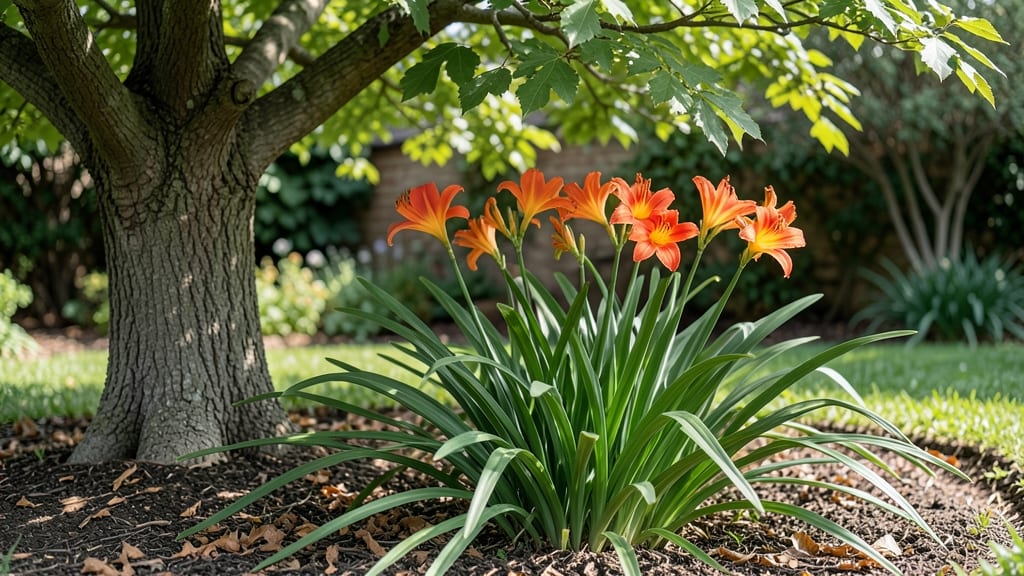
Daylilies can grow in shade but thrive best with at least 4-6 hours of sunlight daily. In low-light areas, choose shade-tolerant varieties like 'Happy Returns' or 'Stella de Oro,' and ensure well-draining soil to prevent root rot from excess moisture. Growth may be slower and blooms fewer in deep shade.
Daylilies are famously adaptable, but their performance in shade depends on how much light they receive. 🌿 In areas with only 2-3 hours of sunlight, you’ll still get growth, but expect smaller leaves and fewer blooms—some varieties may even revert to their wild, grass-like form.
The key is selecting the right cultivars; 'Happy Returns' and 'Stella de Oro' are proven performers, but even they benefit from morning sun exposure. Poor drainage becomes a bigger issue in shade, so amending soil with compost or sand can make all the difference.
Think of shade as a compromise: your daylilies will survive, but they’ll never reach their full potential without adequate light.
For gardeners working with limited sunlight, focus on positioning plants near the home’s east or north sides where indirect light lingers longer. Mulching helps retain moisture while preventing soil compaction, which is especially critical when roots can’t photosynthesize efficiently.
Remember: even shade-tolerant daylilies won’t bloom reliably in full shade—they need at least some light to fuel their energy demands. The trade-off is worth it for structural foliage, though!
💡 In This Article
- Daylily Light Requirements: How Shade Affects Growth and Flowering
- Top Shade-Tolerant Daylily Varieties for Low-Light Gardens
Daylily light requirements: how shade affects growth and flowering
Daylilies rely on sunlight to produce chlorophyll, the green pigment that drives photosynthesis—the process where light energy converts carbon dioxide and water into glucose for growth.
In shade, chlorophyll production slows, forcing plants to rely on stored energy, which explains why leaves often appear thinner and paler. 🌱 The real issue isn’t just reduced growth, though—it’s how shade stress weakens stem strength.
Without sufficient light, stems become leggy and floppy, making plants more susceptible to wind damage or breaking under the weight of blooms.
Photosynthesis efficiency drops dramatically in deep shade (less than 2 hours of sunlight daily), where daylilies may produce only 30-50% of the blooms they would in full sun. The trade-off is visible: flowers shrink in size, and bloom cycles shorten.
For example, 'Stella de Oro' typically produces 3-4 blooms per stem in full sun but may yield just 1-2 blooms in deep shade. The foliage also reverts to a more grass-like appearance, losing its lush, broad-leafed structure.
Partial shade (4-6 hours of sunlight) strikes a balance—daylilies grow taller with stronger stems and larger leaves, supporting more blooms. The key is morning sun exposure, which provides the high-intensity light needed for photosynthesis while avoiding the heat stress of afternoon rays.
Without this, plants enter a survival mode, diverting energy to root growth instead of flowering. 🌿 Even shade-tolerant varieties like 'Happy Returns' will reward gardeners with 10-20% more blooms when given just a few hours of direct light.
Soil moisture becomes a critical factor in shade. Without sunlight to evaporate excess water, roots sit in damp conditions longer, increasing the risk of fungal diseases like root rot. Well-draining soil with a pH of 6.0-7.0 helps mitigate this, as does mulching with organic matter to improve aeration.
The combination of poor drainage and low light creates a double whammy for daylilies, which is why many gardeners in shaded areas opt for raised beds or containers to control moisture levels.
Consider this comparison: a daylily in full sun may reach 24-30 inches tall with 6-8 blooms per season, while the same variety in deep shade might max out at 18 inches with only 2-3 blooms. The difference isn’t just aesthetic—it’s biological.
Shade reduces the plant’s ability to produce the sugars needed for energy, forcing it to prioritize basic survival over reproduction. That’s why even the hardiest varieties, like 'Midnight Wine,' will struggle to deliver their signature deep burgundy blooms without adequate light.
For gardeners working with limited space, positioning daylilies near reflective surfaces (like light-colored walls or gravel) can amplify available light by 10-15%. This trick mimics the effect of partial shade while boosting photosynthesis.
The takeaway? Shade isn’t a dealbreaker, but it’s a trade-off. Your daylilies will live, but they’ll never truly thrive without their daily dose of sunlight. ✨