
Blooming
Transform your shady garden into a vibrant, low-maintenance paradise with these 10 shade-loving perennials. Each plant delivers stunning blooms, lush foliage, or seasonal interest while thriving in minimal sunlight—perfect for under trees, north-facing walls, or dense woodland gardens.
Hostas with Variegated Blue-Green Leaves

If you love textured foliage that thrives in shady corners without demanding constant attention, variegated blue-green hostas are your perfect match. These classic perennials bring architectural elegance to borders and woodland gardens, their wavy leaves creating movement even in still air.
Hostas like 'Blue Angel' or 'Halcyon' flourish in partial to full shade, making them ideal for understory planting. Their occasional summer blooms—lavender or purple spikes—add subtle interest without competing with bold flowers. For best results, mulch annually to retain moisture and protect roots from temperature swings.
Urban gardeners and beginners will appreciate their low-maintenance nature, while seasoned designers use them to create cohesive, layered looks. 🌿
Bleeding Heart for Spring Delicate Blooms

If your garden feels like a blank canvas under towering trees, bleeding heart (Dicentra spectabilis) is the perfect stroke of color. This romantic perennial thrives where sunlight barely reaches, producing cascading clusters of heart-shaped blooms in soft pink or white from late spring through early summer.
Plant it in moist, well-draining soil with deep shade to partial shade—it’s one of the few perennials that actually prefers these conditions. After flowering, the foliage turns lush and green, providing year-round interest. For best results, divide clumps every 3-4 years to maintain vigor and encourage more abundant blooms.
Ideal for cottage gardens, woodland edges, or as a focal point under trees, bleeding heart brings effortless elegance to shady spots. 🌷
Hellebores for Early Winter-to-Spring Color

When your garden looks like a blank canvas in winter, hellebores step in as the unsung heroes—blooming cheerfully even when snow blankets the ground. These winter-hardy perennials, often called "Lenten roses," produce nodding flowers in soft whites, blush pinks, or deep purples, defying the season's dormancy with their resilience.
Plant them in partial to full shade where other perennials fade, and they'll reward you with year-round interest: evergreen foliage in summer, striking blooms in late winter/early spring, and seed heads that add texture in fall. Deadhead spent flowers to encourage more blooms, and mulch heavily to protect their roots from freeze-thaw cycles. Deer often avoid them, making hellebores a low-maintenance choice for problem areas.
Perfect for beginners or busy gardeners, hellebores thrive with minimal fuss while delivering color when you need it most. Try planting them near patios or entryways to enjoy their delicate blooms up close. 💚
Astilbe with Feathery Plume Flowers

Tired of dense, leafy hostas dominating your shade garden? Astilbe brings a breath of fresh air with its fluffy, feathery plumes in pink, white, or fiery red—perfect for adding height and movement where other perennials fade.
This moisture-loving perennial thrives in partial to full shade**, making it ideal for understory planting or north-facing beds. Varieties like 'Fanal' (deep red) or 'Deutschland' (pink) bloom from midsummer through fall, while their fern-like foliage adds texture year-round. Keep soil consistently damp—mulch heavily to retain moisture and prevent flopping stems.
Urban gardeners with limited space will love how astilbe fits into containers, while woodland gardeners can use it to create soft, romantic borders. It’s the perfect way to brighten shady spots without sacrificing elegance. ✨
Japanese Painted Fern for Year-Round Texture

Looking for a shade perennial that delivers visual drama without the fuss of constant blooms? The Japanese painted fern (Athyrium niponicum) is your answer—a foliage superstar with silver, green, and burgundy hues that shine year-round, even when no flowers are in sight.
This low-maintenance fern thrives in partial to full shade, making it perfect for woodland gardens, container plantings, or as a textural anchor under trees. Its fronds develop a stunning gradient from silver at the tips to deep burgundy at the base, creating a natural color palette that evolves with the seasons. Water consistently to keep the soil moist but well-draining, and enjoy its deer-resistant nature—ideal for problem areas.
Container gardeners and urban dwellers will love how it brightens small spaces, while woodland gardeners can use it to create lush, layered looks. It’s the perfect way to add color and texture without the upkeep of flowering perennials. 💚
Lungwort with Spotted Leaves and Blue Flowers

Want a shade perennial that works as hard as it looks? Lungwort (Pulmonaria) delivers two seasons of interest—silver-spotted foliage that emerges in early spring followed by clusters of sky-blue flowers that attract bees and butterflies. Unlike many shade plants, it actually improves as the season progresses, with leaves turning green after blooming for a seamless transition.
This pollinator magnet thrives in deep to partial shade where other perennials give up, making it perfect for woodland gardens, understory planting, or north-facing beds. Varieties like 'Sissinghurst Blue' produce the most vibrant blooms, while 'Heritage' offers a mix of pink and blue flowers. Keep soil consistently moist (but not soggy) and divide every 3-4 years to prevent overcrowding—its self-seeding habit means you’ll likely get free volunteers.
Wildlife gardeners and pollinator enthusiasts will appreciate how lungwort extends the blooming season in early spring, while cottage gardeners love its romantic, slightly wild appearance. It’s the perfect way to add color and movement to shady corners without the fuss. 🌟
Coral Bells with Vibrant Foliage Varieties

Want to add a bold pop of color to your shade garden without sacrificing foliage drama? Coral bells (Heuchera) deliver a two-season show with their striking, evergreen leaves in deep purple, lime green, or even variegated patterns—plus, some varieties reward you with delicate bell-shaped flowers in summer.
These low-growing perennials thrive in partial to full shade, making them perfect for rocky beds, containers, or as edging under trees. Varieties like 'Palace Purple' or 'Lime Rickey' create vibrant contrasts, while 'Berry Smoothie' blends burgundy, pink, and green for a multicolored effect. Water moderately—keeping soil consistently moist but well-draining—and enjoy their drought tolerance once established.
Urban gardeners and small-space planners will love how coral bells fit into tight spots, while woodland gardeners can use them to create layered, textured borders. Their year-round foliage ensures your shade garden stays lively even when other perennials fade. 💚
Toad Lily for Summer Hummingbird Magnet

When late summer arrives and most shade-loving perennials have faded, toad lily (Tricyrtis hirta) steps in as a dramatic late-season star. Its striking orange-and-white striped flowers bloom from August through October, providing a bold contrast to the muted tones of most shade gardens—and hummingbirds can't resist them.
This clump-forming perennial thrives in partial to full shade, making it perfect for understory planting or woodland gardens. Its sword-like, evergreen foliage adds texture year-round, while its drought-tolerant nature means less watering once established. For best results, plant in well-draining soil and divide clumps every 3-4 years to maintain vigor.
Shade gardeners with late-season color gaps will love how toad lily extends the blooming season, while pollinator enthusiasts gain a hummingbird favorite that few other shade plants can match. 🌻
Solomon’s Seal with Arching Flower Stems

If you crave vertical drama in your shade garden without the fuss of staking or trellising, Solomon’s seal (Polygonatum) is your secret weapon. This graceful perennial produces arching stems adorned with dangling white bell-shaped flowers that cascade like nature’s own chandelier, while its glossy green leaves add lush contrast to shady spots.
Thriving in partial to full shade, Solomon’s seal blooms in early summer, followed by clusters of blue-black berries that persist through winter, offering structure when most gardens go dormant. Varieties like 'Variegatum' add golden edges to the foliage for extra visual appeal. Plant in moist, well-draining soil and allow stems to arch naturally—no support needed! Deer often avoid it, making it a low-maintenance choice for problem areas.
Woodland gardeners and cottage-style designers will love how Solomon’s seal creates soft, flowing layers that contrast beautifully with bold foliage plants. It’s the perfect way to add height and movement to shady borders without sacrificing elegance. 🌿
Sweet Woodruff for Fragrant Ground Cover

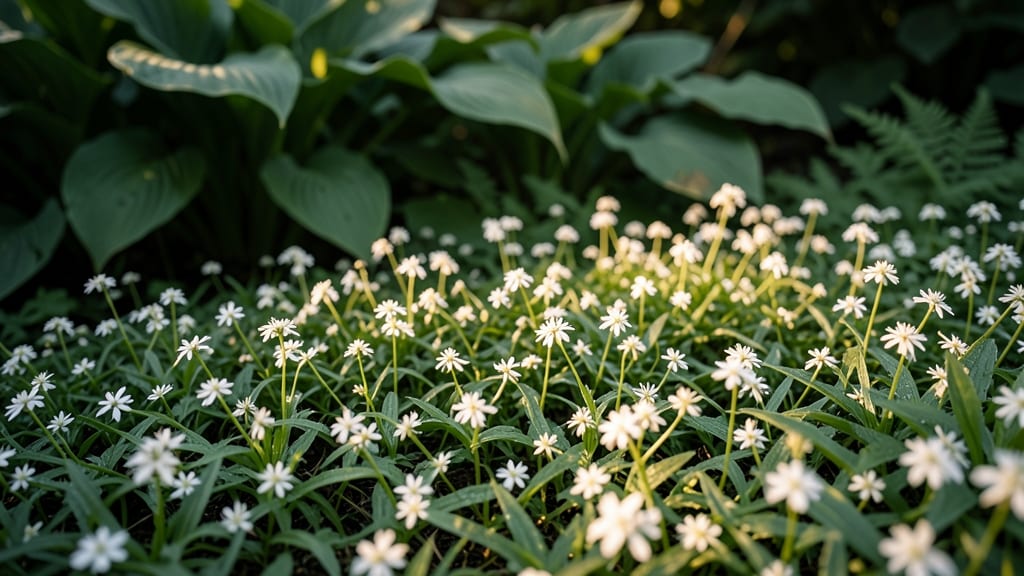
If you crave a shade garden that engages all your senses, sweet woodruff (Galium odoratum) delivers a fragrant surprise with every step. This delicate ground cover produces star-shaped white flowers in spring, followed by a lush, spreading carpet of green foliage that releases a vanilla-like scent when brushed against—like a natural perfume for your garden.
Thriving in partial to full shade, sweet woodruff is perfect for woodland edges, understory planting, or as a living mulch under trees. It spreads quickly but stays low (6-12 inches tall), making it ideal for filling gaps between taller perennials. While it prefers moist, well-draining soil, it tolerates dry shade once established—just avoid heavy foot traffic to preserve its delicate foliage.
Woodland gardeners and cottage-style enthusiasts will love how sweet woodruff creates a sensory experience, while urban gardeners can use it to soften shady corners. Its self-seeding habit means it often multiplies naturally, reducing maintenance. 🌿